You Won’t Believe What I Found in Bologna’s Hidden Alleys
Wandering through Bologna, I wasn’t just walking—I was time-traveling through centuries of bold design and quiet genius. Forget crowded landmarks; the real magic hides in centuries-old porticoes, secret courtyards, and brick towers leaning like sleepy giants. I never expected such raw architectural beauty in a city that feels both ancient and alive. This is more than a trip—it’s a tactile journey through stone, shadow, and light. Let me show you the Bologna only locals truly know.
First Impressions: Stepping Into a City That Thinks Differently
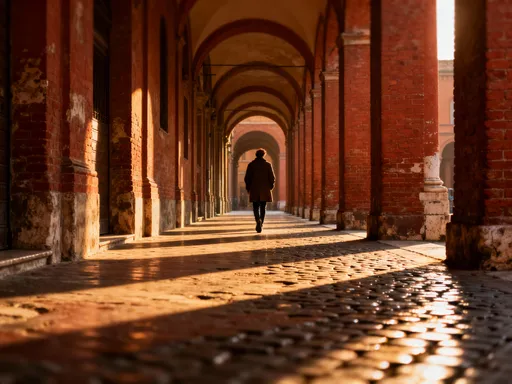
Arriving in Bologna by train, there’s a quiet shift—a subtle but unmistakable transition from the modern world into one shaped by centuries of thoughtful urban living. The station itself is unassuming, more functional than grand, yet within minutes of stepping outside, the city wraps around you like a well-worn coat. The first thing that strikes visitors is the sea of terracotta rooftops stretching in every direction, a patchwork quilt of warm reds and russets glowing under the northern Italian sun. But it’s the porticoes that define the rhythm of movement, the very pulse of the city. These covered walkways line nearly every street, creating a continuous sheltered path that stretches over 40 kilometers through the historic center. Unlike Rome’s monumental sprawl or Florence’s curated elegance, Bologna feels intimate, almost conversational in scale. Its streets are narrow, its buildings close enough to whisper across, and the absence of overwhelming tourist crowds allows space for genuine connection with the environment.
Walking beneath the porticoes, one begins to understand that this is not just an architectural feature—it’s a philosophy. The covered walkways soften the extremes of weather, offering refuge from both summer heat and winter rain, but they also create a social membrane between public and private life. Locals move beneath them at all hours: mothers pushing strollers, students cycling between university lectures, shopkeepers arranging displays just inside their arched entrances. There’s a sense of continuity here, a feeling that daily life has unfolded along these same paths for generations. The emotional impact is subtle but profound. You don’t come to Bologna to see a single monument; you come to experience a city where architecture serves people, not spectacle. And from the moment you step into its embrace, you begin to walk differently—slower, more attentively, as if the stones themselves are sharing secrets.
The Porticoes: Not Just Shade, But a Way of Life
Bologna’s porticoes are more than shelter—they are the city’s circulatory system, a network of covered passages that link homes, markets, churches, and universities into a seamless urban fabric. Recognized as a UNESCO World Heritage site in 2021, these arcades span over 38 kilometers, each with its own character shaped by centuries of use and adaptation. Some are tall and grand, supported by elegant stone columns; others are humble, built from brick and timber, barely tall enough for a man on a bicycle. What unites them is their function: to protect, to connect, and to invite lingering. In a country known for its piazzas and open-air life, Bologna offers something different—a city designed for walking, for conversation, for living under cover without feeling enclosed.
The most iconic of these is the Portico di San Luca, a breathtaking 3.5-kilometer arcade that winds uphill from the city center to the Sanctuary of the Madonna di San Luca. With 666 arches climbing gently through gardens and olive groves, it is the longest portico in the world. Walking it at dawn, when the morning mist still clings to the hills and the city stirs below, is a meditative experience. The rhythm of footsteps echoes against the brick, punctuated only by the distant chime of church bells. Pilgrims, joggers, and locals on morning errands all share this path, each moving at their own pace but united by the quiet ritual of ascent. Historically, the portico was built to allow worshippers to reach the sanctuary in all weather, but today it serves a broader purpose: a symbol of endurance, of connection between earth and sky, city and countryside.
Yet the true genius of Bologna’s porticoes lies not just in their grandest examples but in their ubiquity. They are not reserved for ceremonial routes or tourist paths—they line ordinary streets, sheltering bakeries, bookshops, and apartment entrances. Children play beneath them during rainstorms; neighbors stop to chat under the arches; students spread out textbooks on stone benches tucked into alcoves. This integration of architecture into everyday life reflects a deeper cultural value: the belief that public space should be accessible, comfortable, and human-centered. In a world increasingly dominated by cars and concrete, Bologna’s porticoes stand as a quiet rebuke—and a hopeful alternative.
Leaning Towers That Defy Logic (And Gravity)
Rising above Bologna’s red-tiled skyline are two medieval towers that have watched over the city for nearly a thousand years—the Asinelli and the Garisenda. Built in the 12th century by rival noble families as symbols of power and prestige, these freestanding structures were once part of a forest of over 180 towers that dotted the cityscape. Today, only a few remain, but none are as iconic as these two. The Asinelli Tower stands at 97 meters, making it the tallest leaning medieval structure in the world. The Garisenda, though shorter at 47 meters, leans even more dramatically, its upper floors tilting inward like a book slipping off a shelf. Dante Alighieri himself referenced the Garisenda in the Divine Comedy, comparing its disorienting slope to the feeling of dizziness induced by divine vision.
Standing beneath the Garisenda Tower, one feels a strange mix of awe and unease. The lean is so pronounced that it seems to pull the sky downward, distorting perspective and creating a subtle vertigo. Engineers monitor the structure constantly, reinforcing its foundation to prevent collapse, yet the tower remains a powerful symbol of Bologna’s resilience—both architectural and cultural. The Asinelli Tower, while more stable, offers a different kind of thrill. Visitors can climb its 498 wooden steps, ascending through darkness and creaking timbers to emerge at the top, where panoramic views stretch across the Emilia-Romagna plains. On clear days, the Alps shimmer in the distance, and the endless grid of porticoed streets unfolds below like a living map.
These towers were never meant to be tourist attractions. They were statements—bold, almost arrogant declarations of wealth and influence in a time of civic competition. Yet today, they serve a different purpose: as anchors of memory, as landmarks that orient both locals and visitors in space and time. Their imperfections—their leans, their weathered surfaces, their asymmetry—make them more compelling than perfectly preserved monuments. They remind us that cities are not static museums but evolving organisms, shaped by forces both human and natural. In a world that often prizes perfection, Bologna’s towers teach us to find beauty in imbalance, strength in vulnerability.
Courtyards and Hidden Passages: The City’s Secret Pulse
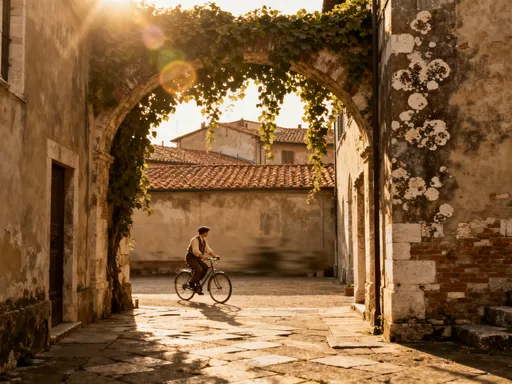
One of Bologna’s most enchanting qualities is its ability to conceal beauty behind unremarkable facades. Along busy streets lined with cafes and boutiques, an ordinary wooden door may open onto a Renaissance courtyard so perfectly proportioned it feels like stepping into a painting. These hidden atriums—often enclosed by arcaded galleries, crowned with wrought-iron balconies, and softened by climbing ivy—are remnants of noble palaces, former convents, and university buildings. Many are now private residences or academic institutions, but their presence infuses the city with a sense of layered history. To discover one is to feel like an explorer uncovering a long-forgotten diary, each stone column and weathered fountain telling a story of centuries past.
The Courtyard of the Archiginnasio, once the main building of the University of Bologna—the oldest university in continuous operation in the Western world—is a prime example. Inside, the courtyard is a symphony of symmetry and light, surrounded by double-tiered arcades supported by sandstone columns. Above, the upper galleries are lined with wooden balconies where students once gathered for lectures. At its center stands a statue of Hercules, the mythical founder of Bologna, gazing stoically into the heavens. But it’s the细节—the intricate carvings on the keystones, the soft patina of the stone, the way sunlight filters through the arches at midday—that makes the space so emotionally resonant. This is not a reconstructed historical set; it is a place where time has accumulated, where every scratch and stain carries meaning.
Other courtyards reveal different moods. Some are cloistered and serene, evoking the quiet contemplation of monastic life. Others are vibrant and communal, used for student gatherings, open-air concerts, or summer film screenings. The Convent of Santa Cristina, now part of the university’s music department, opens into a tranquil cloister where the sound of piano practice drifts through the arches. These spaces function as lungs within the dense urban fabric—places to pause, breathe, and reconnect with beauty. For visitors willing to look beyond the storefronts, these hidden passages offer a deeper understanding of Bologna’s soul: a city that values privacy, tradition, and the quiet dignity of enclosed spaces.
Brick by Brick: The Humble Beauty of Bologna’s Material Identity
If Bologna has a signature color, it is terracotta—the warm, earthy red of sun-baked clay. This is the city’s foundational material, used in everything from grand churches to humble back-alley staircases. Unlike the marble-clad facades of Florence or the stuccoed palaces of Venice, Bologna’s architecture embraces the humble brick with unapologetic pride. The result is a cityscape that feels grounded, organic, and deeply human. The bricks vary in shade—some ruddy, others ochre or russet—giving the buildings a handcrafted quality, as if each structure were shaped by individual hands rather than mass production.
Inside, the mastery of brickwork becomes even more evident. Vaulted ceilings, ribbed domes, and intricate archways are all rendered in brick, demonstrating a level of craftsmanship that turns a simple material into art. Residential buildings feature arched doorways framed with subtly decorated keystones, while stairwells rise through dimly lit passages lined with hand-laid bricks that glow softly in candlelight or lamplight. Even the city’s many churches, including the Basilica of San Petronio, incorporate brick in ways that emphasize texture and rhythm over ornamentation. San Petronio’s facade, famously unfinished, reveals the raw brick beneath its marble panels, creating a striking contrast between ambition and reality.
What makes Bologna’s use of brick so remarkable is its consistency. While other Italian cities often showcase architectural variety—Baroque here, Gothic there—Bologna maintains a visual harmony through repetition and restraint. The same materials, proportions, and techniques appear across centuries, creating a sense of continuity that is both calming and powerful. This is not a city that seeks to impress with novelty, but one that finds elegance in endurance. For the observant traveler, walking through Bologna becomes a lesson in humility: true beauty does not require extravagance, only attention, care, and respect for tradition.
Architecture Meets Daily Life: Markets, Cafés, and Living Spaces
In Bologna, architecture is not something to be admired from a distance—it is lived in, used, and adapted. Nowhere is this more evident than in the Mercato di Mezzo, a two-level market that has served the city for over a century. Housed in a restored 19th-century building with iron-framed windows and high ceilings, the market is a sensory delight: stalls overflow with fresh pasta, local cheeses, cured meats, and seasonal produce. Above, restaurants and wine bars occupy the upper floor, many built into former storage rooms or service corridors. The design allows for both efficiency and sociability—vendors and customers interact at close range, conversations flow easily, and meals are shared at communal tables beneath exposed beams.
Throughout the city, old structures are repurposed with quiet ingenuity. A former stable becomes a cozy enoteca; a ground-floor arcade transforms into a family-run gelateria; university lecture halls occupy what were once noble residences. These adaptations are not gimmicks or forced revitalizations—they feel natural, almost inevitable, as if the buildings themselves welcome new uses. Residential spaces, too, reflect this fluid relationship between past and present. Many apartments are carved into medieval towers or tucked behind porticoed facades, their interiors blending modern comforts with historic features like vaulted ceilings and original wooden beams.
Watching locals navigate this environment is to witness a deep, unspoken understanding between people and place. An elderly woman buys bread beneath a 14th-century archway without glancing up; students study in a 16th-century courtyard as if it were their living room; a chef prepares tortellini in a kitchen that once belonged to a convent. There is no performative nostalgia, no attempt to preserve the past as a museum piece. Instead, history is worn lightly, integrated into daily routines with grace and practicality. This is what makes Bologna feel so alive: its architecture is not a relic, but a companion to contemporary life.
Why Bologna Changes How You See Cities
After spending days in Bologna, something shifts in the way you perceive urban spaces. The city does not dazzle with grand monuments or Instagrammable vistas. Instead, it reveals its beauty slowly, through repetition, texture, and the quiet rhythm of daily life. Unlike more touristed Italian cities—where crowds gather at famous piazzas and landmarks feel like stage sets—Bologna remains stubbornly authentic. Students outnumber selfie-stick wielders, bicycles outnumber tour buses, and the sound of espresso machines blends with the rustle of academic robes.
What sets Bologna apart is its architectural coherence. While other historic cities have been altered by modern development or overwhelmed by tourism, Bologna has maintained a remarkable continuity of form and material. The porticoes, the brick, the courtyards—they all speak the same language, creating a sense of harmony that is increasingly rare in the modern world. This coherence is not enforced by rigid rules, but cultivated through generations of shared values: a preference for walkability, a respect for craftsmanship, and a belief that public space should serve everyone.
Equally important is the city’s balance between preservation and livability. Buildings are not frozen in time; they are used, modified, and loved. Families raise children in centuries-old homes, artisans work in converted workshops, and students debate philosophy in medieval cloisters. This dynamic interplay between old and new teaches a powerful lesson: that heritage is not something to be protected behind glass, but something to be lived. In a world where cities often sacrifice character for convenience, Bologna stands as a quiet model of resilience, showing us that the most enduring urban environments are those that prioritize people over spectacle.