What I Found in Dahab’s Food Markets Will Blow Your Mind
You know that feeling when you stumble upon a place so real, so raw, it redefines travel? That’s Dahab, Egypt. Far from polished resorts, this sleepy Red Sea town hooked me with its unfiltered charm—especially its food culture. I didn’t just taste meals; I uncovered stories in every bite. From smoky grilled meats to fragrant spice-laden bread, each flavor felt like a secret whispered from the locals. This isn’t just eating—it’s discovery on a plate. In a world where so many destinations feel manufactured for tourists, Dahab remains refreshingly untouched, where food is not a performance but a way of life. To eat here is to be welcomed, slowly and sincerely, into the rhythm of a community that values warmth over spectacle.
Arrival in Dahab: A Town That Feels Like a Well-Kept Secret
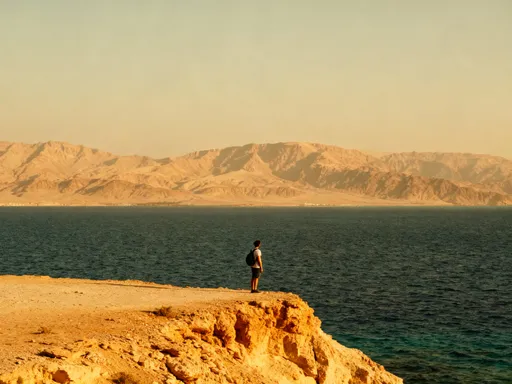
Dahab greets you like an old friend who remembers your name. There are no grand airport shuttles or flashing billboards—just a quiet stretch of coastal road winding past clusters of low-rise buildings, palm trees swaying in the breeze, and the ever-present scent of salt and cumin in the air. Unlike the bustling, resort-lined shores of Sharm El Sheikh, Dahab moves at the pace of a deep breath. It’s a place where time slows, and priorities shift from luxury to authenticity. Once a modest fishing village, Dahab has evolved into a haven for divers, backpackers, and those seeking a gentler kind of escape—one rooted in simplicity and human connection.
The town’s Bedouin heritage is evident in its architecture, its pace, and above all, its hospitality. Homes are built with sun-bleached stone and wooden latticework, and many families still gather in courtyards shaded by grapevines. But it’s at the table where tradition speaks loudest. Food in Dahab is not an afterthought or a tourist commodity—it’s central to identity. Every meal is a communal event, a continuation of customs passed down through generations. For visitors, this means more than just sampling local dishes; it means being invited into a culture where generosity is measured in shared plates and lingering conversation.
What sets Dahab apart from other Egyptian tourist destinations is its resistance to over-commercialization. There are no chain restaurants or themed dinner cruises. Instead, you’ll find family-run eateries tucked between dive shops and textile stalls, where the menu changes with the season and the catch of the day. This authenticity extends to the way people eat: slowly, mindfully, and always with others. For the traveler seeking depth over dazzle, Dahab offers something rare—a chance to experience Egypt not as a spectator, but as a guest.
Morning Rituals: Breakfast Like a Local
The day in Dahab begins not with alarms, but with the clink of teacups and the murmur of early risers gathering at seaside ahwas. These traditional coffee houses are more than places to drink—they are social hubs, where fishermen swap stories, elders debate the weather, and travelers quietly observe. Sitting on low wooden stools with your feet in the sand, you quickly realize that breakfast here is not a meal, but a ritual. It unfolds over an hour or more, accompanied by strong Arabic coffee served in small glass cups and glasses of mint tea so fragrant they perfume the morning air.
The centerpiece of a Dahabi breakfast is ful medames—slow-cooked fava beans stewed with garlic, lemon, and cumin, then drizzled with olive oil. Served in a wide earthenware bowl, it’s scooped up with warm, pillowy pita bread baked fresh each morning in wood-fired ovens. Alongside, you’ll find platters of briny olives, creamy jibna cheese (a mild, feta-like dairy staple), and sometimes a few slices of ripe tomato or cucumber. There’s no rush, no need to order—what arrives is what’s available, and that’s exactly the point. This is food without pretense, prepared with care and shared without hesitation.
What makes this experience so powerful is not just the food, but the atmosphere. As the sun rises over the Gulf of Aqaba, casting golden light across the water, you become part of the town’s daily rhythm. Children walk to school in crisp white uniforms, fishermen mend their nets on the shore, and shopkeepers sweep sand from their doorsteps. Sitting at an ahwa, sipping tea and breaking bread, you’re not just observing local life—you’re living it, if only for a moment. It’s a quiet reminder that the most meaningful travel experiences often come not from grand sights, but from simple, human moments.
The Heartbeat of Flavor: Exploring Dahab’s Open-Air Markets
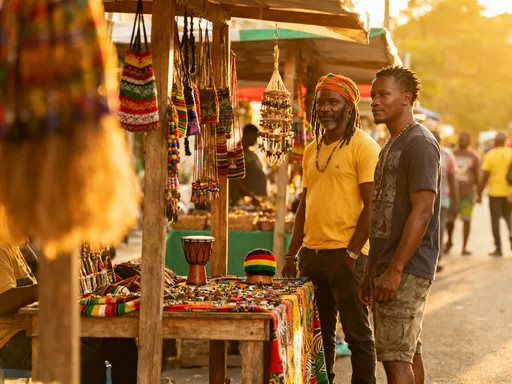
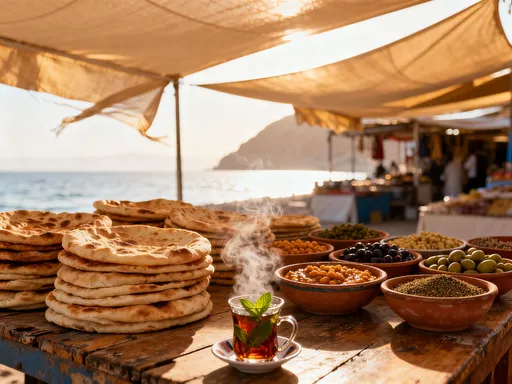
If the ahwa is where Dahab wakes up, the souk is where it pulses with life. The town’s open-air market is a symphony of color, scent, and sound. Narrow alleys lined with canvas awnings lead you past stacks of dried limes, mounds of crimson paprika, and bundles of fresh herbs tied with twine. The air is thick with the perfume of cumin, coriander, and za’atar—a fragrant blend of thyme, sesame, and sumac that is a staple in every local kitchen. Vendors call out greetings in Arabic, their voices warm and unhurried, as you weave through stalls piled high with dates, figs, and handwoven baskets.
What makes Dahab’s market special is its authenticity. Unlike tourist-centric bazaars in larger cities, this is a place where locals shop for their daily needs. The spices are sold in paper cones, measured by hand on old brass scales. Bread vendors pull golden rounds of pita from clay ovens, their faces dusted with flour. Fishmongers display the morning’s catch on beds of ice—glossy hammour, silvery sardines, and plump prawns still glistening with sea spray. There’s no performance here, no staged photo ops—just real life, unfolding in real time.
Interacting with the sellers is part of the experience. A smile, a few words in broken Arabic, and you’re often rewarded with a sample or a story. One elderly woman offered a pinch of saffron from a tiny cloth pouch, explaining how her family has used it for generations to flavor rice and stews. A spice merchant demonstrated how to crush cardamom pods between his palms, releasing their citrusy aroma. These small exchanges are more than transactions—they’re acts of cultural sharing. And while there are unspoken rules—don’t haggle aggressively, accept tea if offered, always say shukran (thank you)—the overall tone is one of warmth and welcome.
Street Food Adventures: Where Taste Meets Tradition
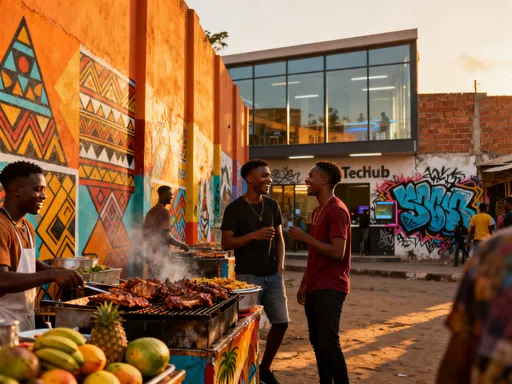
No visit to Dahab is complete without diving into its vibrant street food scene. Unlike formal restaurants, street vendors offer a direct line to the soul of Egyptian cuisine. You’ll find carts tucked into corners of the market, parked near mosques, or set up on sidewalks during evening strolls. The most sought-after dishes are koshari and taameya—two icons of Egyptian comfort food. Koshari is a hearty mix of lentils, rice, macaroni, and chickpeas, topped with crispy fried onions and a tangy tomato-vinegar sauce. It’s a dish born of necessity, combining affordable ingredients into something deeply satisfying. Taameya, often called Egyptian falafel, is made from ground fava beans rather than chickpeas, giving it a softer, more herbaceous flavor.
Choosing where to eat is part science, part instinct. The busiest carts are usually the safest—high turnover means fresh ingredients and clean handling. Look for vendors who wear gloves or use tongs, and avoid those with food sitting out in the sun. But beyond hygiene, there’s a social rhythm to street eating. Locals gather around carts not just to eat, but to talk, laugh, and share. A man in a striped galabeya might hand you a napkin if yours blows away. A teenager might offer a bite of his taameya sandwich with a grin. These moments of spontaneous kindness are woven into the fabric of daily life.
Street food in Dahab is more than convenience—it’s a cornerstone of community. It’s where students meet before class, workers refuel during breaks, and families stroll after sunset. The act of eating together, even briefly, reinforces social bonds. For travelers, embracing street food is a way to step off the tourist path and into the rhythm of local life. It requires a bit of courage—trying new flavors, navigating language barriers, trusting the unknown—but the rewards are immense. Each bite is a lesson in resilience, creativity, and the universal joy of a well-made meal.
Hidden Eats: Off-the-Beaten-Path Dining Experiences
One of the most unforgettable moments of my time in Dahab came not in a restaurant, but in a home. Invited by a local guide for lunch, I stepped into a modest courtyard shaded by a fig tree, where women in colorful dresses stirred pots over a gas stove. This was a beit—a private home opening its doors to share authentic Bedouin cuisine. Such experiences are not advertised online or listed in guidebooks. They happen through connections, kindness, and a willingness to say yes to unexpected invitations.
The meal was a feast of slow-cooked dishes that spoke of patience and tradition. Maqluba, meaning “upside-down,” was the centerpiece—a layered casserole of rice, eggplant, and spiced lamb, flipped onto a large platter so the golden crust faced up. It was served with a side of salata baladi, a fresh salad of tomatoes, cucumbers, and onions dressed with lemon and olive oil. Every bite carried the depth of flavors built over hours of simmering, infused with cardamom, cinnamon, and black lime. Dessert was simple: sweet dates stuffed with almonds and a cup of sage tea said to aid digestion.
What made this meal extraordinary was not just the food, but the sense of belonging. The family insisted I eat with my hands, showing me how to tear off pieces of bread to scoop the rice and meat. Children peeked from doorways, giggling at my attempts to pronounce Arabic phrases. The grandmother, seated on a cushion, watched with quiet approval. There was no rush to leave, no bill to pay—just the unspoken understanding that I was now, however briefly, part of their world. These hidden meals are the heart of Dahab’s culinary culture: intimate, generous, and rooted in centuries of tradition.
Seafood with a View: Coastal Catches and Sunset Feasts
Dahab’s relationship with the sea is not just economic—it’s cultural, spiritual, and deeply personal. For generations, fishing has sustained families, shaped diets, and influenced daily routines. Along the bay, you’ll find small, unmarked grills set up on the sand, where fishermen cook their catch just steps from where it was pulled from the water. These impromptu seaside kitchens have no menus, no tables, and often no chairs—just a charcoal grill, a few stools, and the endless horizon.
The seafood here is as fresh as it gets. Hammour (grouper), prawns, and squid are seasoned simply—with salt, lemon, garlic, and perhaps a touch of cumin—then grilled over open flames until the skin blisters and the flesh turns opaque. You eat with your hands, fingers slick with juice, the ocean breeze cooling your face as the sun dips below the mountains. A side of rice or a piece of warm pita is all you need. The flavors are clean, bright, and deeply satisfying, a testament to the quality of the ingredients and the care in their preparation.
These sunset feasts are more than meals—they’re rituals. Locals come here not just to eat, but to unwind, to reflect, to be still. Teenagers gather in groups, laughing and sharing fish. Couples sit close, watching the sky turn pink and gold. Even solo diners seem at peace, lost in the rhythm of the waves. For the fishermen, cooking their own catch is a point of pride, a way of honoring their labor and sharing it with others. As a traveler, dining at one of these shorefront grills feels like being let in on a quiet secret: that the best food in Dahab isn’t found in restaurants, but where the land meets the sea, and where simplicity speaks louder than spectacle.
From Spice to Story: Why Food Is Dahab’s True Currency
In Dahab, food is not just sustenance—it’s memory, identity, and connection. Every dish carries a story: of ancestors who wandered the desert, of mothers who passed down recipes by taste rather than measurement, of communities that gather not around screens, but around tables. Unlike the standardized menus of mass tourism, where meals are replicated for consistency, Dahab’s cuisine thrives on variation, seasonality, and personal touch. A stew made by one woman will taste different from her neighbor’s, not because one is better, but because each carries the imprint of her hands, her history, her home.
This authenticity stands in stark contrast to the curated experiences found in resort towns. There, food is often a performance—plated for aesthetics, served with scripted friendliness, consumed in air-conditioned isolation. In Dahab, it’s the opposite: meals are messy, shared, and alive. They invite participation, curiosity, and gratitude. To eat here is to engage with a culture that values presence over perfection, generosity over profit, and connection over convenience.
For travelers seeking real culinary experiences, a few simple tips can open doors. Learn a few basic Arabic phrases—basbouseh (delicious), min fadlak (please), shukran (thank you). Visit the market in the morning, when vendors are most relaxed. Accept invitations, even if you’re unsure of the outcome. And above all, eat with an open heart. Ask about ingredients, compliment the cook, stay a little longer than expected. These small gestures build trust and often lead to the most memorable moments—like being handed a cup of tea by a spice seller who remembers your name.
Conclusion: Eating as a Form of Travel Wisdom
Leaving Dahab, I carried more than souvenirs. I carried the taste of smoky grilled fish, the warmth of shared bread, the sound of laughter around a family table. I realized that my journey had not been measured in miles, but in meals—each one a doorway into a deeper understanding of place and people. In Dahab, I stopped being a tourist and became, for a little while, a guest. And that shift changed everything.
Travel is often sold as a quest for sights, for checklists, for Instagram moments. But the truest form of exploration happens not through the lens of a camera, but through the act of breaking bread with strangers who become friends. In Dahab, food is not an attraction—it’s an invitation. An invitation to slow down, to listen, to savor. It teaches us that the world is not something to be conquered, but to be welcomed, one meal at a time.
So if you go to Dahab, don’t just visit. Sit. Stay. Eat. Let the flavors guide you. Let the people teach you. Because in the end, the most powerful souvenirs are not things you can pack in a suitcase, but the connections you carry in your heart. In Dahab, every meal is a story waiting to be shared—and every bite is a step closer to belonging.