You Won’t Believe These Hidden Viewpoints in New Delhi
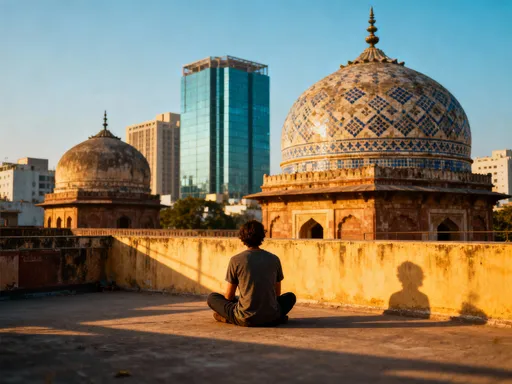
Stepping into New Delhi, I expected chaos—but not beauty hiding in plain sight. Beyond the honking rickshaws and bustling streets, I discovered quiet rooftops, ancient corners, and skyline secrets most travelers miss. These aren’t just scenic spots; they’re moments where the city reveals its soul. From sunrise over Mughal domes to golden-hour silhouettes against modern skylines, New Delhi’s best viewpoints redefine what you thought you knew. This is real, raw, and absolutely worth the climb. What I found was not just a city of noise and motion, but one of rhythm and revelation—where elevation offers clarity, and stillness reveals stories. This journey is about more than sightseeing. It’s about seeing differently.
The Soul of the City: Why Viewpoints Matter in New Delhi
Understanding New Delhi begins not at street level, but from above. On the ground, the city assaults the senses—honking horns, swirling dust, the scent of street food mingling with exhaust, and crowds moving in all directions. It’s a place that demands attention, often all at once. Yet, from an elevated vantage point, the chaos transforms into a pattern, the noise into a rhythm. Observation from height does not remove the city’s complexity, but it allows for a moment of pause, a breath of perspective. It is in these still moments, looking down on the swirl of life, that one begins to appreciate the layered soul of India’s capital.
Viewpoints in New Delhi are more than scenic backdrops for photographs. They are meditative spaces where the mind can untangle the intensity of urban life. Imagine the sensation of stepping away from the foot traffic, climbing a few flights of stairs, and suddenly seeing the city stretch out beneath you—the grid of roads, the clusters of trees, the shimmer of water bodies, and the domes of centuries-old monuments peering through the skyline. This shift in altitude brings a shift in awareness. It is like tuning a radio through static until a clear frequency emerges. From above, the city’s contradictions—its ancient and modern, its serenity and speed—no longer feel conflicting, but complementary.
For many visitors, New Delhi is a transit point, a necessary stop before heading to the Himalayas or Rajasthan’s palaces. But those who take time to look up, to climb, to wait for the right light, discover that the city itself holds treasures. The emotional impact of witnessing a sunrise from a quiet rooftop, or watching the city lights flicker on at dusk, stays long after the journey ends. These elevated experiences offer not escape, but connection—to the landscape, to history, and to the quiet resilience of everyday life unfolding below.
Rooftop Reveries: Where Locals Watch the World Go By
One of the most authentic ways to experience New Delhi is from the rooftops of its southern neighborhoods, where local life unfolds at a gentler pace. In areas like Shahpur Jat and Hauz Khas Village, converted heritage homes and boutique cafes often feature open terraces that serve as unofficial observation decks. These spaces are not built for spectacle, but for presence. They invite visitors to slow down, sip a cup of masala chai, and simply watch. The views are unfiltered—over rooftops of red-tiled homes, past clotheslines and satellite dishes, toward tree-lined avenues and distant spires.
From these elevated perches, the city feels more intimate. You might see children playing in a courtyard, a street vendor balancing his cart on a narrow lane, or pigeons circling a minaret at dusk. The sounds are softer here—laughter drifting from a nearby balcony, the distant call to prayer, the rustle of leaves in the breeze. These rooftops are not designed for mass tourism. They are lived-in spaces, often shared by residents and small businesses, where the rhythm of daily life continues even as visitors pause to take it all in.
What makes these spots truly special is their lack of pretense. There are no entrance fees, no timed tickets, no crowds jostling for space. A simple order of coffee or snack grants access to hours of quiet observation. Some terraces overlook green enclaves like the Hauz Khas Deer Park, where the contrast between urban development and natural preservation is striking. Others face southward, offering long views across tree-covered neighborhoods where colonial-era bungalows stand beside modern apartments. The blend of textures—old and new, built and green—creates a visual narrative that is uniquely Delhi.
For families and solo travelers alike, these rooftop moments offer a rare balance of comfort and authenticity. Parents can relax while children play in safe, open areas. Travelers seeking solitude can find a corner with a notebook or camera, capturing not just the skyline, but the subtle movements of city life. These spaces remind us that beauty often lies not in grand monuments, but in the ordinary moments seen from an extraordinary angle.
Historical High Ground: Forts and Monuments with Panoramic Power
Delhi has been rebuilt seven times, and its forts stand as silent witnesses to empires risen and fallen. Among the most powerful viewpoints are those found within Purana Qila (Old Fort) and Lal Qila (Red Fort), where the ramparts offer not just sweeping vistas, but a deep sense of historical continuity. Climbing the stone steps of these ancient structures, one doesn’t just gain elevation—one steps into layers of time. The sandstone walls, weathered by centuries, frame views of modern highways, bustling markets, and distant government buildings, creating a visual dialogue between past and present.
Purana Qila, believed to stand on the site of Indraprastha from the Mahabharata, offers one of the most peaceful elevated experiences in the city. Arriving at dawn, when the morning mist still clings to the moat and the park inside is quiet, transforms the space into a sanctuary. From the upper walkways, visitors can see the city waking up—the first buses on Mathura Road, office workers cycling to work, kites soaring above the treetops. The view extends north toward Humayun’s Tomb and east toward the Yamuna River, a ribbon of silver in the early light. The absence of crowds at this hour allows for uninterrupted reflection, making it a favorite among photographers and meditative travelers.
Lal Qila, the iconic red sandstone fort built by Mughal Emperor Shah Jahan, provides a more structured but equally powerful vantage point. From the ramparts near the Diwan-i-Aam (Hall of Public Audience), the view stretches across Chandni Chowk, one of Asia’s busiest markets. What appears from street level as an overwhelming maze of stalls and traffic reveals a kind of order from above—a network of lanes radiating outward like veins. The golden domes of nearby temples, the spire of St. James Church, and the modern towers of central Delhi all come into view, illustrating the city’s religious and architectural diversity.
Both forts are best visited in the early morning, not only for cooler temperatures but for clearer air and fewer visitors. The soft light of sunrise enhances the warm tones of the sandstone, casting long shadows that accentuate the texture of the walls. These sites are not merely tourist attractions; they are places of contemplation, where the weight of history meets the pulse of contemporary life. Standing on these ramparts, one feels both small and connected—to the millions who have lived, ruled, and passed through this city over centuries.
Park Perches: Green Escapes with a View
For those who prefer nature as a frame for urban views, Delhi’s parks offer gentle elevations and serene overlooks. Unlike the dramatic climbs of forts or rooftops, these spots provide accessible vantage points where families, joggers, and elderly walkers gather daily. Buddha Jayanti Park in Mehrauli, built to commemorate the 2,500th anniversary of Buddha’s enlightenment, features a central mound that rises above the surrounding greenery. From the top, a panoramic view unfolds—tree canopies stretching in every direction, the distant silhouette of Qutub Minar, and the modern skyline peering through the haze. The park’s peaceful atmosphere, enhanced by a large Buddha statue and lotus pond, makes it ideal for quiet reflection.
Another remarkable green space is the Garden of Five Senses in Vasant Kunj. As the name suggests, the park is designed to engage sight, sound, smell, touch, and even taste through its landscaping. Elevated pathways wind through sculpted gardens, offering changing perspectives with every turn. From certain points, the view includes rolling lawns, water features, and the city beyond, softened by layers of foliage. The contrast between the park’s curated beauty and the urban sprawl in the distance is striking, reminding visitors of the importance of green lungs in a densely populated capital.
These park perches are particularly welcoming for families with children or older adults who may find steep climbs difficult. Benches are plentiful, shade is abundant, and the pace is slow. Morning yoga groups gather on open lawns, while birdwatchers scan the treetops for kingfishers and parakeets. The elevated paths are wide and well-maintained, allowing for comfortable walking while still offering moments of visual surprise—a sudden opening in the trees revealing a distant tower, or the sun breaking through clouds over a lake.
What sets these green viewpoints apart is their ability to blend relaxation with discovery. There is no rush, no pressure to capture the perfect photo. Instead, the experience unfolds naturally, as one strolls from one vantage point to the next. These spaces prove that elevation does not require grand architecture or commercial access. Sometimes, the best views come from a simple rise in the earth, surrounded by trees and birdsong, where the city feels not overwhelming, but harmonious.
Modern Vantage Points: Malls, Hotels, and Urban Architecture
In a city that never stops building, modern structures offer some of the most accessible—and climate-controlled—viewpoints. Upscale malls like DLF Promenade in Vasant Kunj feature upper-level restaurants and lounges with floor-to-ceiling windows, providing panoramic views of the surrounding neighborhood. While these spaces lack the historical weight of forts or the intimacy of rooftops, they offer comfort and convenience, especially during the hot summer months or monsoon season. Sitting with a cup of coffee, watching the rain fall over the city, can be a surprisingly peaceful experience.
Hotels such as The Lalit New Delhi or The Ashok feature sky lounges and rooftop bars that cater to both guests and visitors. These venues often provide unobstructed views of central Delhi, including landmarks like India Gate and the Parliament House. The advantage of these locations is their consistency—well-lit, safe, and staffed with professionals who ensure a pleasant experience. For travelers with limited mobility or those traveling with young children, these spaces offer a stress-free way to enjoy the cityscape without navigating crowded streets or climbing narrow staircases.
Yet, there is a trade-off. The authenticity found in local rooftops or quiet parks is sometimes replaced by a more polished, commercial atmosphere. The view may be clear, but the context is filtered—framed by glass, accompanied by background music, and priced with a premium menu. Still, these modern vantage points serve an important role, especially for first-time visitors who need a gentle introduction to the city’s scale and energy.
Some newer office complexes and cultural centers also feature public observation areas. The India Habitat Centre, for instance, has open terraces used for events and casual gatherings, where the view includes a mix of diplomatic enclaves and green spaces. These spots, while less known to tourists, are frequented by locals and expatriates seeking a quiet place to meet or work. They represent a growing trend—urban design that integrates public access to height and horizon, recognizing that even in a busy city, people crave space to look outward and upward.
Temple Terraces and Spiritual Elevations
In a city rich with spiritual sites, some of the most serene viewpoints are found within temple complexes. The ISKCON Temple in East of Kailash, known for its grand architecture and peaceful ambiance, features upper-level galleries that overlook the surrounding neighborhood. From these terraces, visitors can see the temple’s golden domes reflecting the sun, while the city stretches out beyond a well-manicured garden. The atmosphere is one of calm and reverence, with the scent of incense lingering in the air and devotional music playing softly in the background.
Similarly, the Akshardham Temple complex offers elevated walkways and viewing platforms as part of its expansive design. Though direct rooftop access is limited, the surrounding gardens and causeways provide high-ground perspectives, especially from the rear of the main structure where the view includes the Yamuna River and the Noida skyline. The symmetry of the temple’s architecture frames the city in a way that feels intentional—balancing human achievement with spiritual aspiration.
These spiritual vantage points differ from others in their atmosphere and etiquette. Visitors are expected to dress modestly, remove shoes, and maintain a quiet demeanor. Photography may be restricted in certain areas, but the experience is not diminished. Instead, the act of observation becomes more mindful, more intentional. One does not just look at the view, but absorbs it as part of a larger sense of peace.
For many, these temple viewpoints offer emotional relief as much as visual beauty. In a city that can feel overwhelming, spaces of devotion provide grounding. The elevation here is not just physical, but symbolic—a reminder to rise above daily concerns and see life from a broader perspective. Families often visit these sites together, making them ideal for multi-generational travel. Children learn respect, elders find solace, and all gain a moment of stillness in the midst of motion.
Chasing Light: Best Times and Seasons for the Ultimate Shot
The quality of a viewpoint in New Delhi depends as much on timing as on location. The city’s atmosphere changes dramatically with the time of day and season, affecting visibility, color, and mood. The golden hour—shortly after sunrise and before sunset—transforms the skyline with warm, diffused light. During these moments, the sandstone of Mughal monuments glows, glass towers catch fire, and even the smog seems to soften into a painterly haze. Photographers and casual observers alike agree: these are the hours when Delhi reveals its most photogenic self.
Winter mornings, from November to February, offer the clearest skies and coolest temperatures. Air quality, while still a concern, tends to improve after the Diwali season, and the lower humidity enhances visibility. This is the best time to visit elevated sites like Purana Qila or Buddha Jayanti Park, where distant landmarks can be seen with unusual clarity. Early risers are rewarded not only with light but with solitude—fewer crowds mean more space to breathe and reflect.
Post-monsoon months, from late September to October, bring another window of opportunity. The rains wash away dust and pollutants, leaving the air fresh and the greenery lush. Trees are at their fullest, parks are vibrant, and the city feels rejuvenated. Evening views from rooftops or park mounds during this season are especially rewarding, as the setting sun filters through clean, moist air.
Practical considerations are essential. Checking the AQI (Air Quality Index) before planning a visit can save disappointment—on high-pollution days, even the highest viewpoints may offer only a gray curtain. Dressing in layers is wise, as mornings can be cool and evenings chilly. Bringing water, a light snack, and a camera or notebook enhances the experience. Most importantly, patience is key. A single visit may not capture the city at its best. Returning at different times, in different seasons, allows for a deeper understanding of Delhi’s changing moods.
Conclusion
New Delhi is often described in extremes—either as a city to endure or one to admire from a distance. But those who take the time to seek out its hidden viewpoints discover a different truth. This is a city that rewards curiosity, that reveals its beauty to those willing to climb, wait, and look closely. The best views are not always the most famous, nor the easiest to reach. They are found in quiet moments—a rooftop at dusk, a fort at dawn, a park path after rain.
More than just physical locations, these vantage points offer a shift in mindset. They teach us to see complexity not as chaos, but as richness. They remind us that even in the busiest capital, there are spaces of stillness, and even in the most crowded streets, there are ways to rise above. The city’s soul is not hidden—it is elevated, waiting to be seen.
To travelers, especially women managing family trips or seeking meaningful solo experiences, these viewpoints offer more than scenery. They offer renewal. They provide a chance to pause, to breathe, to reconnect with the joy of discovery. So look up. Climb higher. Let New Delhi surprise you—not with its noise, but with its silence; not with its rush, but with its depth. The city is not just to be visited. It is to be seen, from every angle, with open eyes and an open heart.